A Drainage Minute: The Reid & Pederson Drainage Blog
Spring Melt Warning Signs: Is Your Sewer Line Ready for Heavy Rain?
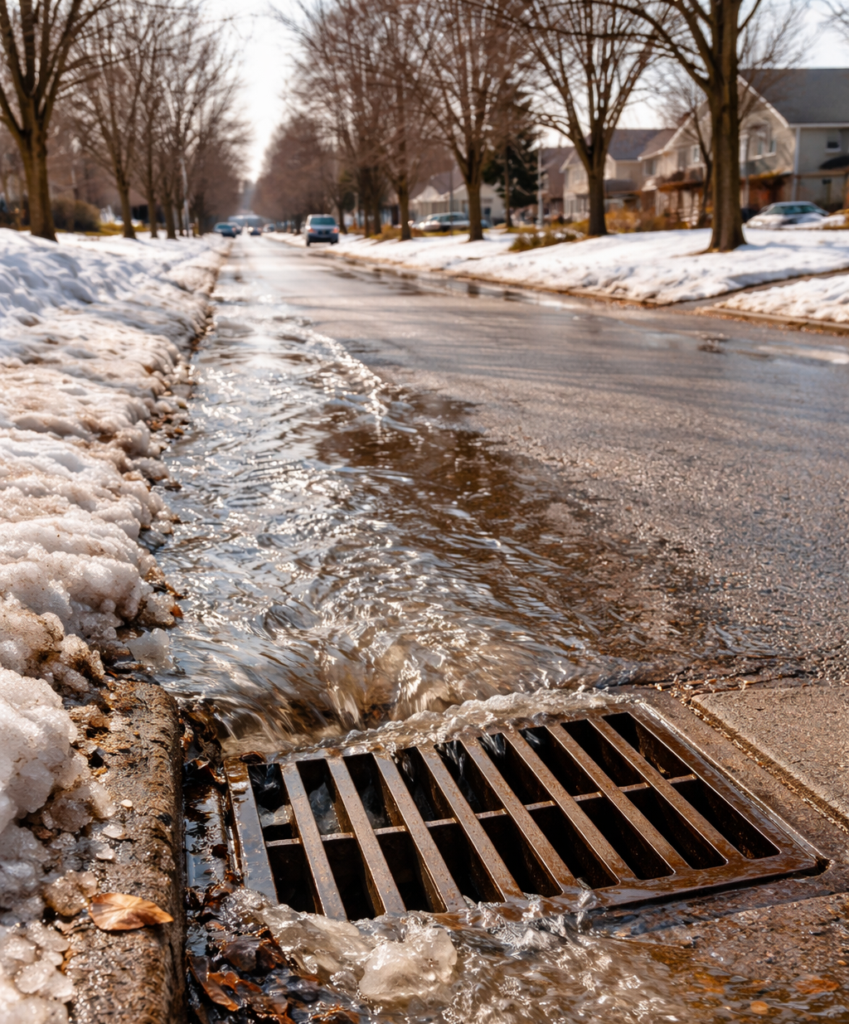
Spring in the South Suburbs of Chicago and Northwest Indiana doesn’t ease in gently. The snow melts, the ground thaws, and then the rain starts — sometimes all in the same week. For a lot of homeowners, that combination hits their drain and sewer systems harder than any other time of year.
At Reid & Pederson Drainage, our Crete drain and sewer pros see it every spring: calls from people dealing with backups, slow drains, and flooded basements that could have been avoided. The warning signs were there. They just weren’t recognized in time.
Here’s how to spot them before your system reaches a breaking point.
Why Spring Is Rough on Sewer Lines
Your sewer line spent the winter buried in frozen, shifting soil. Tree roots that went dormant in the cold start growing again as soon as temperatures rise. Any debris that builds up in the line over winter gets pushed toward whatever blockage is already forming. And when heavy spring rains hit ground that’s still partially frozen or saturated from snowmelt, that water has nowhere to go but through your drain system, all at once.
If your line was already partially blocked or had weak spots going into winter, spring is often when you find out.
Warning Signs You Shouldn’t Ignore
Not just quirks, these are your drain system signaling something’s wrong:
- Slow drains in multiple areas of the house. One slow drain usually means a localized clog. When several drains are sluggish at the same time — kitchen, bathroom, laundry — that main point to a problem further down in the main sewer line.
- Gurgling sounds from toilets or drains. That sound is air being pushed backward through your system because water can’t move freely past a blockage. It’s one of the earliest signs of a main line issue.
- Water backing up in unexpected places. If you run the washing machine and water comes up through the floor drain, or flushing a toilet causes water to surface in the tub, that’s a textbook main sewer line problem.
- Sewage odors inside the house. A properly functioning sewer system is sealed. If you’re smelling sewer gas in your basement or near floor drains, something may be cracked, blocked, or failing.
- Recurring backups after cleaning. If your line has been cleaned before and the problem keeps coming back, something structural is likely going on — root intrusion, a cracked section, a bellied pipe — not just buildup.
Your Spring Sewer Maintenance Checklist
Even without obvious symptoms, spring is a smart time to be proactive. Here’s what’s worth doing before heavy rain season arrives:
- Schedule a camera inspection. A video inspection is the only way to see what’s actually happening inside your line. It can catch root intrusion, cracks, offset joints, and debris buildup before any of it causes a backup. If it’s been a few years since your last one, spring is a good time to get it done.
- Have your line cleaned if it’s been a while. Grease, sludge, and early-stage root growth accumulate quietly over time. Getting your line cleaned before the heaviest rains arrive gives your system a real shot at handling the extra drainage volume without backing up.
- Check your sump pump. Your sump pump and drain system work together to keep groundwater out of your basement. If it weakened or failed over winter, you may not realize it until a heavy rain hits.
- Walk your yard after the first big rain. Look for soft patches, pooling water, or odors over the area where your sewer line runs. These are early signals that something may be leaking underground.
- Look into a maintenance program. If you’ve dealt with recurring sewer problems, a preventive maintenance program puts your line on a regular cleaning schedule. It’s a much easier conversation than explaining a basement backup after the fact.
When It’s More Than a Clog
If an inspection turns up actual damage (cracks, root infiltration, deteriorating pipe), you’ll want to understand your options before deciding anything.
Sewer lining is often the most practical fix for damaged sections. A liner is inserted and cured inside your existing pipe, creating a smooth, sealed surface without digging up your yard. It’s less disruptive than traditional excavation and typically more cost-effective for the right situations.
When damage is more widespread, sewer replacement may be the better long-term call. It’s not the answer anyone hopes for, but for a line that’s too far gone to repair, it’s the honest one. Either way, you’ll get a clear picture of what’s actually going on before any work is recommended.
Already Dealing with a Backup?
If you’re reading this because water is somewhere it shouldn’t be, don’t wait it out. Reid & Pederson offers 24/7 emergency drain and sewer service across the South Suburbs of Chicago and Northwest Indiana. A live person answers the phone and a technician gets dispatched to your home, day or night.
Spring moves fast around here. A little attention now is a lot easier than dealing with a backed-up basement in April. Schedule your spring sewer inspection today and head into the season knowing your system is ready!
South Suburbs

South Suburbs
NW Indiana
NW Indiana
Our Service Areas
Reliable Drain & Sewer Services Across South Suburban Illinois & Northwest Indiana
No matter where you are in the South Suburbs of Illinois or Northwest Indiana, our team is ready to provide top-tier drain and sewer services. From small residences to sprawling multi-unit complexes, we handle it all with efficiency, expertise, and care.