A Drainage Minute: The Reid & Pederson Drainage Blog
Back-to-School Home Prep: Don’t Forget Your Sewer System
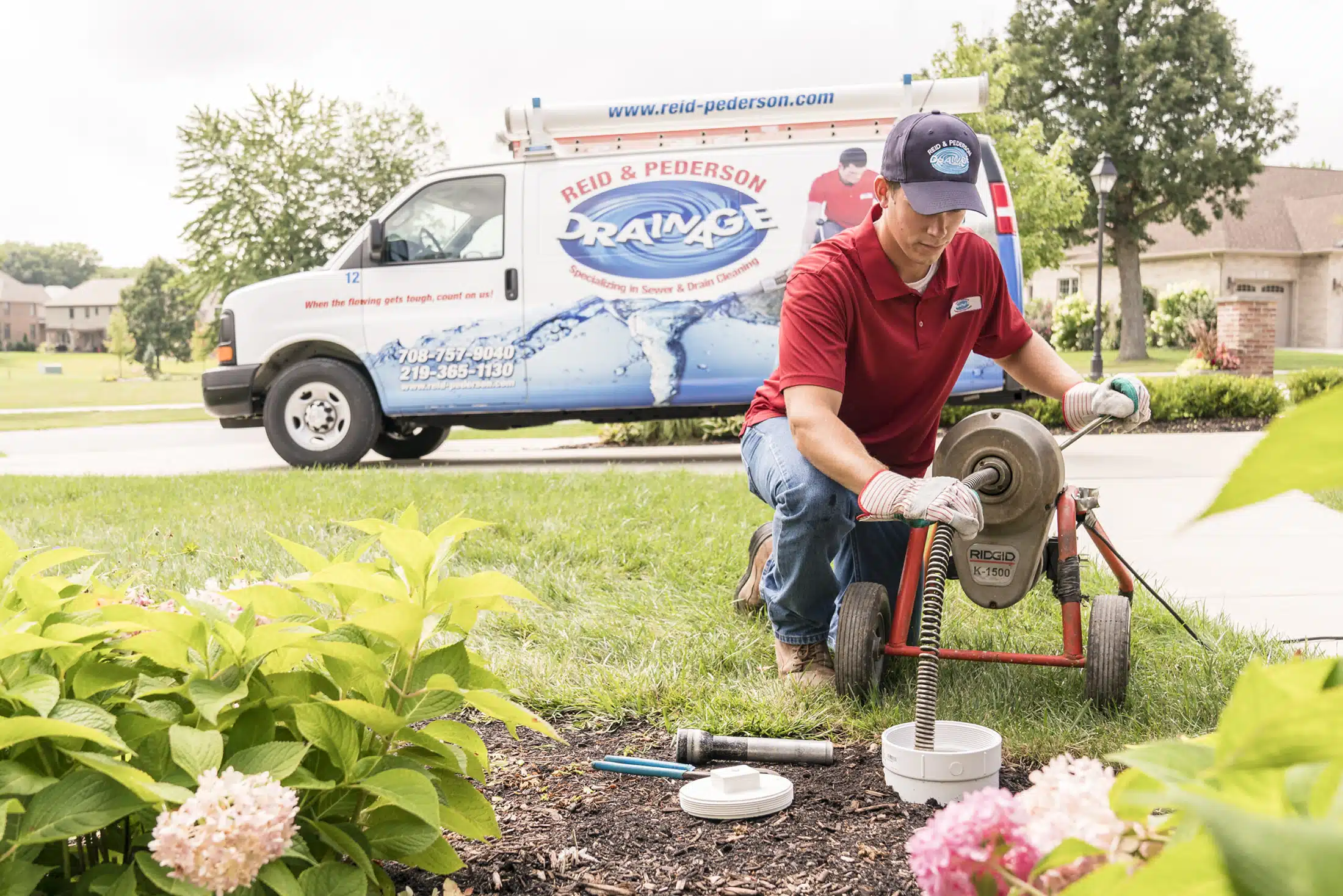
September brings fuller schedules and increased household water use. At Reid & Pederson Drainage, this is also the season when minor sewer issues tend to become significant ones, typically because no inspection took place before a backup occurred. A brief seasonal check can prevent this outcome.
Why Fall Puts More Pressure on Sewer Lines
- Root activity increases. Tree roots grow more aggressively in September and October, seeking moisture before the ground freezes, and an older clay or cast iron line is often the most accessible source nearby.
- Access points become obstructed. Fallen leaves accumulate over outdoor cleanouts and yard drains, blocking the access points a technician would need during a service call.
- Household usage increases. A fuller household means more laundry, more showers, and greater overall demand on a line that has likely gone unchecked since spring.
None of these factors is significant on its own. Combined, they are how a slow drain in September becomes a backup by Thanksgiving.
The September Sewer Checklist
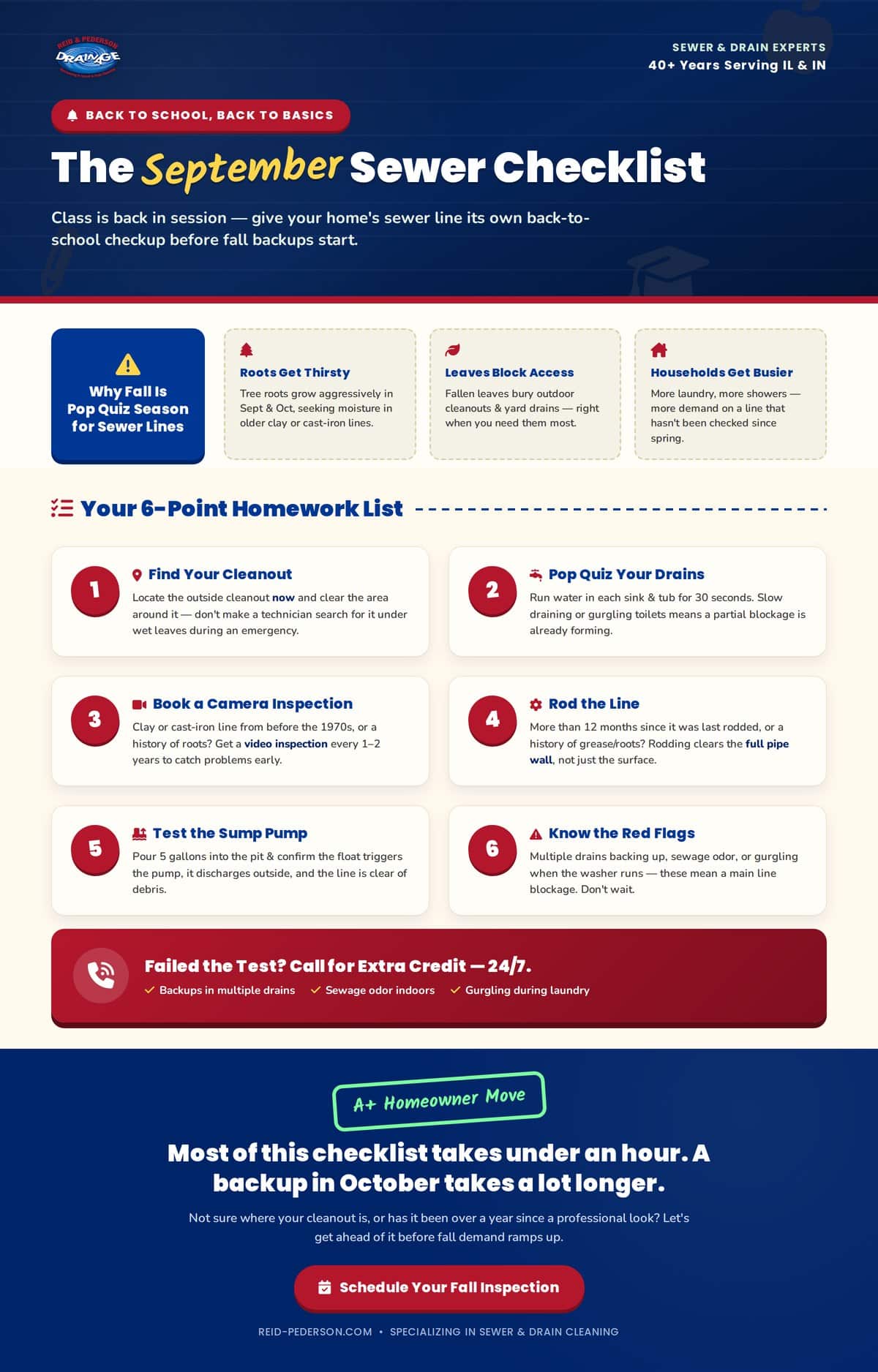
1. Locate the outside cleanout and clear the surrounding area.
This is typically a capped pipe, PVC or cast iron, near the point where the sewer line exits the foundation. Locating it in advance avoids delays during an emergency, when a technician would otherwise need to search for it beneath wet leaves.
2. Test drains rather than waiting for a failure.
Run water in each sink and tub for 30 seconds and note whether:
- Water sits for more than a few seconds before draining
- Gurgling occurs from a toilet or other fixture while water is running
Either indicates a partial blockage forming downstream. Identifying this early typically means a same-day resolution through drain repair rather than a backup later in the season.
3. Schedule a camera inspection for older lines or a history of root intrusion.
Homes with clay or cast iron sewer lines, common in properties built before the 1970s, or a prior history of root intrusion should undergo a video inspection every one to two years. This is the only reliable method for identifying root growth, scale buildup, or a shifted joint before the line becomes fully blocked, and fall inspections tend to catch root activity as it accelerates.
4. Rod the line if more than a year has passed, or if grease or root buildup has occurred previously.
A plunger or over-the-counter drain cleaner addresses only the surface of a clog. Sewer rodding clears buildup along the full length of the pipe wall, which determines whether a clog returns within weeks or is resolved. If more than 12 months have passed since the line was last rodded, this is an appropriate time to schedule the service.
5. Test the sump or ejector pump before seasonal rainfall increases.
- Pour approximately five gallons of water into the pit
- Confirm the float switch activates the pump
- Confirm the pump discharges water outside without backflow
- Check that the outside discharge line has not been obstructed by leaves or debris
Any hesitation in this process warrants a professional assessment through our sump and ejector pump service before the season’s first significant storm.
6. Recognize symptoms that require immediate attention.
- Multiple drains backing up simultaneously
- A sewage odor inside the home
- Gurgling toilets when the washing machine is in use
These symptoms indicate a main line blockage, and delay increases the likelihood of a backup into the basement. Our emergency services team is available 24/7 to address these situations.
The Value of an Annual Maintenance Rhythm
A single fall inspection addresses the current season’s risk. An annual maintenance schedule addresses future risk before it develops. Our sewer maintenance program provides:
- A comprehensive first-year service to establish a baseline
- $40 off preventative rodding in subsequent years
- Scheduling reminders, removing the need to track service history independently
An Easy Investment of Time
Most items on this checklist require under an hour to complete, and the remainder can be addressed with a single phone call. Measured against the cost and disruption of a mid-October backup, this represents a reasonable investment.
Homeowners uncertain of their cleanout location, or for whom more than a year has passed since a professional inspection, should contact Reid & Pederson Drainage to schedule service before seasonal demand increases further.
[phone_number]South Suburbs

South Suburbs
NW Indiana
NW Indiana
Our Service Areas
Reliable Drain & Sewer Services Across South Suburban Illinois & Northwest Indiana
No matter where you are in the South Suburbs of Illinois or Northwest Indiana, our team is ready to provide top-tier drain and sewer services. From small residences to sprawling multi-unit complexes, we handle it all with efficiency, expertise, and care.