A Drainage Minute: The Reid & Pederson Drainage Blog
What to Do When Your Drain Backs Up During the Holidays
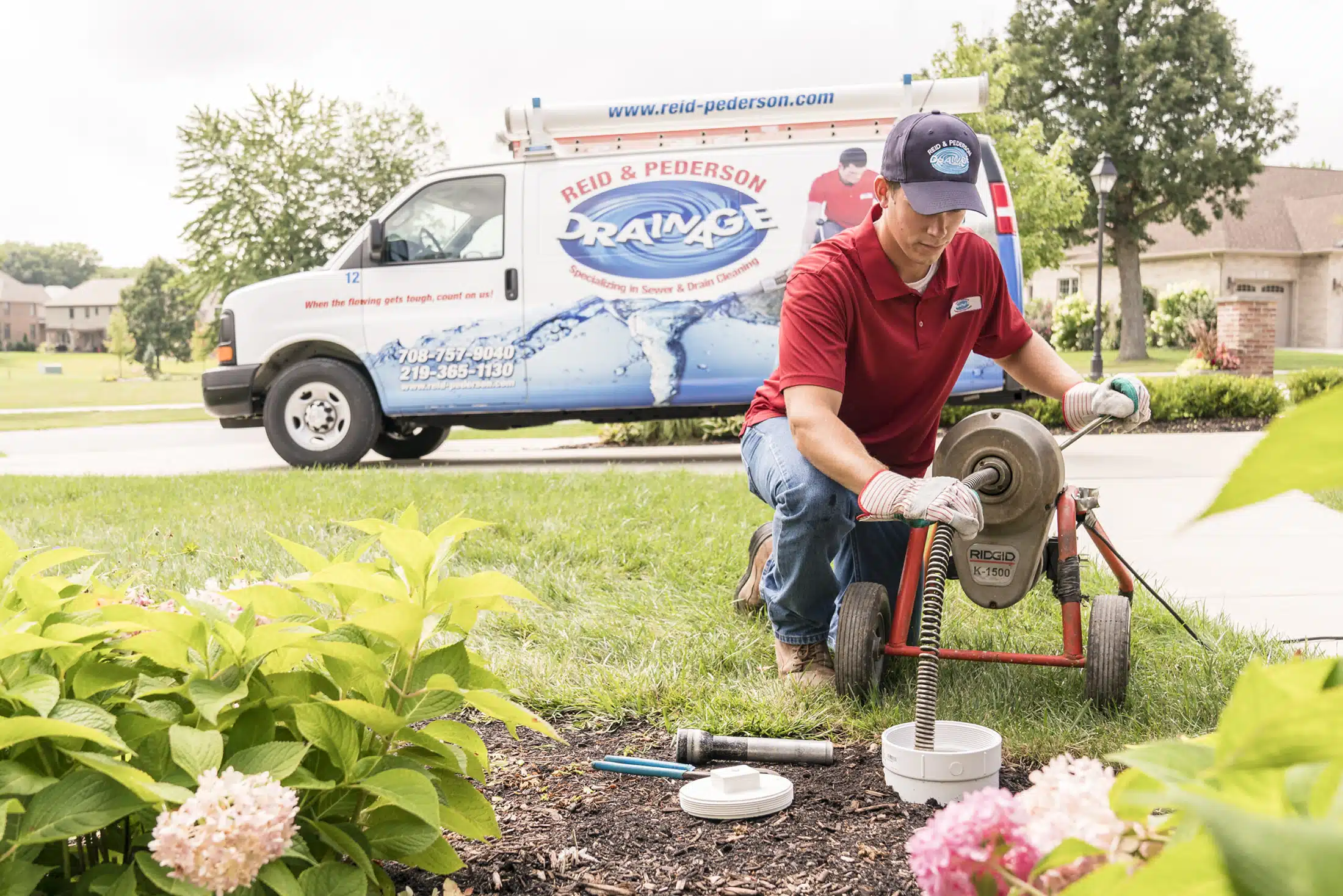

Drain and sewer crews call the day after Thanksgiving “Brown Friday,” and it earns the name. A full day of cooking, dishwashing, and extra guests puts more strain on a sewer line than almost any other day of the year.
At Reid & Pederson Drainage, we’ve been answering those calls across Crete, the South Suburbs, and Northwest Indiana for over 40 years. Knowing what to do in the first 30 minutes can keep a clogged drain from turning into a flooded basement before help arrives.
Start by Figuring Out How Far the Problem Goes
The first thing to figure out is whether you have one clogged drain or a blocked main sewer line. The answer changes every step that follows.
A single-fixture clog usually looks like this:
- One sink, tub, or toilet is slow or won’t drain
- Every other drain in the house works normally
- Using that fixture doesn’t cause problems anywhere else
A main line blockage looks different:
- Several drains are slow at the same time, especially on the lowest floor
- Water comes up through the basement floor drain or a lower-level tub when someone flushes, runs the dishwasher, or starts the washer
- Toilets gurgle or bubble when a nearby sink drains
- A sewer smell comes from floor drains
All the wastewater in your house leaves through a single main line. When that line is blocked, water backs up at the lowest opening it can find, which is usually the basement floor drain. That makes the basement the first place to check.
If Your Basement Bathroom Has an Ejector Pump
Basement bathrooms often rely on an ejector pump to lift wastewater up to the sewer line. If only the basement fixtures are backing up and everything upstairs drains fine, the pump may be the problem rather than the line. Check whether the breaker has tripped. If the pump has stopped running, you may need sump and ejector pump service rather than a sewer cleaning.
First Steps While You Wait for Help
- Stop all water use. Pause the dishwasher and washing machine mid-cycle if needed, and ask everyone to hold off on flushing and showers. Every gallon that goes down a blocked line has to come back up somewhere, and it will come up at the lowest drain.
- Tell your guests which bathrooms are off-limits. A quick heads-up keeps someone from flushing a toilet that’s already full.
- Shut off an overflowing toilet. The supply valve is on the wall behind the toilet, near the floor. Turn it clockwise until it stops.
- Plunge only if a single fixture is affected. A plunger may clear a local sink or toilet clog. On a main line blockage, plunging just pushes water out of another drain.
- Protect the basement. Move boxes, rugs, and anything stored near the floor drain. If wastewater has already come up, keep kids and pets out of the area and wear gloves if you have to walk through it.
- Call for service. For a main line backup with a full house, this is the time to call for emergency drain and sewer service.
What to Avoid
- Chemical drain openers. They rarely clear a main line blockage, and they leave caustic water sitting in the pipe and on your basement floor. That water can splash back on whoever opens the line next, whether that’s you or a technician. Harsh chemicals can also damage aging pipes.
- Flushing to test whether the line has cleared. Wait until the line has been cleaned out.
- Renting a drum machine for the main line. Rental machines are hard to control, can kink or get stuck inside the pipe, and can damage older clay lines.
- Running the garbage disposal. It pushes more food and water into a pipe that already has nowhere to send it.
Details That Help Your Technician
A few specifics when you reach out help us arrive with the right equipment:
- Which drains are affected and when the problem started
- Whether water has come up through a floor drain
- Where your outside sewer cleanout is, if you have one
- The approximate age of the home and any past backups
- What went down the kitchen drain that day
Leave the cleanout cap in place if the line is backed up. A full line can push wastewater out of the cleanout as soon as the cap comes off.
What Happens After the Line Is Clear
Grease and food scraps that harden inside the pipe cause many holiday backups. Sewer rodding cuts through that blockage and gets water moving again, usually in one visit. If the clog is limited to a kitchen or bathroom branch line, drain rodding handles it.
If this is your second or third backup in a few years, or if the cable brings up roots or bits of broken pipe, schedule a camera inspection once the holiday is over. The camera shows whether you’re dealing with buildup, root intrusion, or a cracked or sagging section that needs sewer repair instead of repeat cleanings.
Keeping Next Year’s Holiday Backup-Free
Cooking grease pours down warm and liquid, then hardens as it cools inside the pipe. Cold ground in late November speeds that up. Pour cooled drippings and fryer oil into a can or jar, let it solidify, and throw it in the trash. Wipe greasy pans with a paper towel before washing them. For a longer list, see our post on things you should never put down your drains.
For homes with a history of backups, our sewer maintenance program schedules preventive service ahead of the busy season. After the first year, members get a discount on annual service, a guarantee, and reminders so the appointment doesn’t slip.
Get Help From Reid & Pederson
If your drains back up during the holidays, stop the water, clear the basement floor, and contact our team. We’ll find the cause, clear the line, and tell you plainly whether it needs more than a cleaning. We serve homeowners in Crete, the South Suburbs, and Northwest Indiana.
South Suburbs

South Suburbs
NW Indiana
NW Indiana
Our Service Areas
Reliable Drain & Sewer Services Across South Suburban Illinois & Northwest Indiana
No matter where you are in the South Suburbs of Illinois or Northwest Indiana, our team is ready to provide top-tier drain and sewer services. From small residences to sprawling multi-unit complexes, we handle it all with efficiency, expertise, and care.