A Drainage Minute: The Reid & Pederson Drainage Blog
Holiday Cooking & Your Drains: Preventing Grease-Related Sewer Blockages
Call for South Suburbs
Call (708) 757-9040Call for NW Indiana
Call (219) 365-1130South Suburb Service
North West Indiana Service
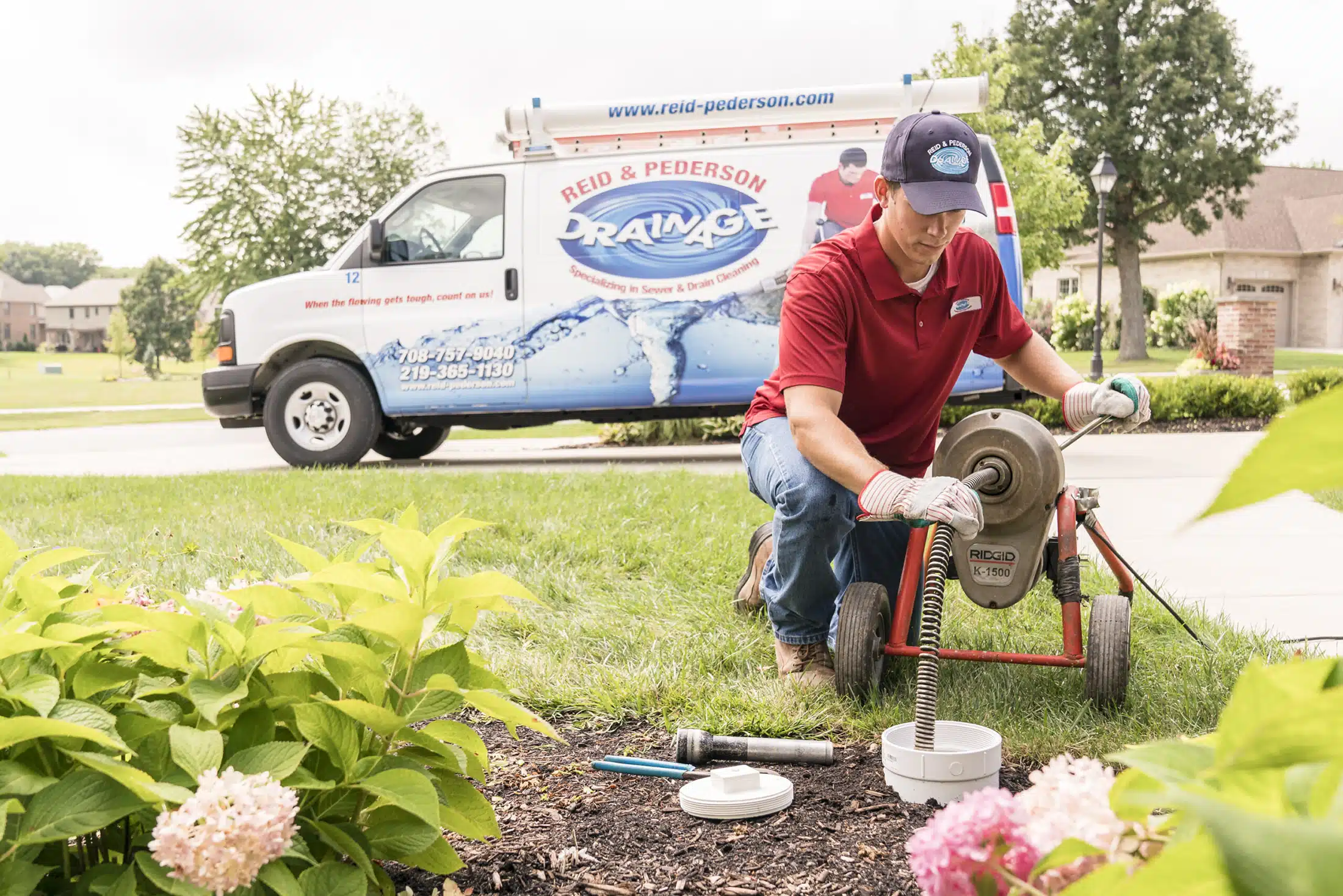

Thanksgiving is one of the heaviest cooking days of the year, and much of what’s left over from the meal ends up in the kitchen sink. At Reid & Pederson Drainage, we see the effects every November across Crete, the South Suburbs, and Northwest Indiana: kitchen lines and main sewers that worked normally in October and back up the day after the holiday. Oftentimes the cause is cooking grease.
This guide covers the habits that lead to many holiday drain clogs, how to dispose of grease properly, and when a pre-holiday cleaning makes sense.
How Cooking Grease Damages Your Pipes
Grease enters the drain as a liquid. As it moves through the pipe and cools, it solidifies and coats the pipe walls. Each layer adds to the buildup and traps other material that follows, including food particles, coffee grounds, and soap residue.
Many older homes in Homewood, Chicago Heights, and Park Forest have cast iron drain pipe inside the house and clay tile running to the street. Cast iron develops a rough interior surface as it ages, and clay tile has joints every few feet. Both conditions make it easier for grease to accumulate.
A grease clogged drain often doesn’t fail during the meal itself. It’s more common for the line to back up in the days to come. The grease becomes a bigger problem when temperatures drop below freezing. The grease that initially slowed the drain can freeze solid. Once this happens even a commercial rodding machine can’t cut through the blockage until the frozen grease thaws.
Holiday Kitchen Mistakes That Lead to Clogs
Pouring Drippings or Fryer Oil Down the Sink
Turkey drippings, bacon fat, gravy, and used fryer oil cause the majority of holiday grease clogs. A turkey fryer holds several gallons of oil, enough to block a kitchen drain line by itself.
Flushing Grease With Hot Water and Dish Soap
Hot water and dish soap keep grease in liquid form only temporarily. The grease travels farther into the system and hardens there, often in the main sewer line, where the blockage is more difficult and more costly to clear.
Using the Garbage Disposal for Food Waste
A garbage disposal breaks food into smaller pieces, but those pieces still have to travel through your pipes. Potato peels form a starchy paste, rice and pasta absorb water and expand, and eggshells and coffee grounds settle in low points of the line. Combined with grease, these materials form dense blockages.
Running Several Appliances at Once
Operating the dishwasher, washing machine, and showers back to back sends a large volume of water into a line that may already be coated with fresh grease. This is when partial clogs most often become full backups.
Using Chemical Drain Cleaners
Store-bought drain cleaners rarely remove grease completely, and they can damage older pipes. A slow kitchen sink usually indicates a clog in the branch line beneath the sink, which professional drain rodding can clear safely.
How to Dispose of Grease Properly
- Allow fat to cool in the pan, then scrape it into a sealable can or jar and place it in the trash.
- Wipe roasting pans and skillets with a paper towel before washing.
- Use a sink strainer and empty it into the trash rather than the disposal.
- Let fryer oil cool completely, return it to its original container, and check whether your village or county offers a cooking oil drop-off after Thanksgiving.
- Spread dishwasher and laundry loads throughout the day.
If your basement bathroom or laundry room drains into an ejector pit, grease and food waste can coat the float switch and cause the pump to fail. Keeping grease out of the sink also protects your sump and ejector pumps.
When a Pre-Holiday Drain Cleaning Is Worth It
We recommend scheduling a cleaning before you host if any of the following apply:
- Your kitchen sink drains slowly or makes gurgling sounds.
- A basement floor drain gurgles or produces an odor when the washer drains.
- You’ve had a sewer backup within the past few years.
- You have mature trees between your home and the street.
- You’re hosting a large group and haven’t had the main line cleaned in two or more years.
The two most common cleaning methods serve different purposes. Sewer rodding uses a cable with a cutting head to break through blockages and roots and restore flow. Hydro-jetting uses high-pressure water to remove grease from the pipe walls, which makes it better suited to heavy buildup and recurring clogs. Our article on sewer rodding vs. hydro-jetting explains the differences.
For older lines, a sewer camera inspection shows how much grease has accumulated and whether the pipe is in suitable condition for jetting. If your home has an outside sewer cleanout, our technicians can use larger cutting blades and clean the full length of the line without accessing it through a toilet inside your home.
Book in late October or early November, before availability tightens around Thanksgiving.
For homes with recurring grease or root problems, our Sewer Maintenance Program includes annual preventive rodding at $40 off, a one-year guarantee, and scheduling reminders.
What to Do If a Drain Backs Up
Stop using water immediately, including the dishwasher and washing machine. Any additional water will rise through the lowest drain in the house. Avoid chemical cleaners and call our team. Our emergency services are available 24/7, including holidays, for homeowners in Crete, Steger, Munster, Dyer, and surrounding communities. For a detailed checklist, see our guide on what to do when your drain backs up during the holidays.
Prepare Your Drains Before the Holidays
Preventive cleaning costs considerably less than an emergency backup with a house full of guests. If your kitchen sink is already slow or your sewer hasn’t been serviced recently, contact Reid & Pederson Drainage to schedule an appointment before the holiday season. We’ll evaluate your lines, explain what they need, and provide an upfront price before any work begins.
South Suburbs

South Suburbs
NW Indiana
NW Indiana
Our Service Areas
Reliable Drain & Sewer Services Across South Suburban Illinois & Northwest Indiana
No matter where you are in the South Suburbs of Illinois or Northwest Indiana, our team is ready to provide top-tier drain and sewer services. From small residences to sprawling multi-unit complexes, we handle it all with efficiency, expertise, and care.